Tuesday, May 10, 2016

Pont Alexandre III

The Pont Alexandre III is a deck arch bridge that spans the Seine in Paris. It connects the Champs-Élysées quarter with those of the Invalides and Eiffel Tower. The bridge is widely regarded as the most ornate, extravagant bridge in the city.[2][3] It is classified as a French Monument historique.
gold=or
bridge=bridge
eagles=aigles
river=riviere
lamps=lampes

Boudin Noir Aux Pommes

Far Breton

Tuileries Garden

The Tuileries Garden (FrenchJardin des TuileriesIPA: [ʒaʁdɛ̃ de tɥilʁi]) is a public garden located between the Louvre Museum and the Place de la Concorde in the 1st arrondissement of Paris. Created by Catherine de Medici as the garden of the Tuileries Palace in 1564, it was eventually opened to the public in 1667, and became a public park after the French Revolution. In the 19th and 20th century, it was the place where Parisians celebrated, met, promenaded, and relaxed.[1
]
flowers=fleurs
green trees=arbres vert
ferris wheel=ferris roue
marble=marbre
apartment=appartement

Cheese Soufflé

Gâteau Basque

Les Invalides

Les Invalides (French pronunciation: ​[lezɛ̃valid]), commonly known as Hôtel national des Invalides (The National Residence of the Invalids), or also asHôtel des Invalides, is a complex of buildings in the 7th arrondissement ofParisFrance, containing museums and monuments, all relating to the military history of France, as well as a hospital and a retirement home for war veterans, the building's original purpose. The buildings house the Musée de l'Armée, the military museum of the Army of France, the Musée des Plans-Reliefs, and theMusée d'Histoire Contemporaine, as well as the Dôme des Invalides, a large church with the burial site for some of France's war heroes, most notablyNapoleon Bonaparte (lists below).
grass=herbe
street lights=lampadaires
dome=dome
door=porte
window=window

Steak Tartare

Gâteau au yaourt

Palais Garnier

The Palais Garnier  is a 1,979-seat opera house, which was built from 1861 to 1875 for the Paris Opera. It was originally called the Salle des Capucines, because of its location on the Boulevard des Capucines in the 9th arrondissement of Paris, but soon became known as the Palais Garnier, in recognition of its opulence and its architect, Charles Garnier. The theatre is also often referred to as the Opéra Garnier (French About this sound  ) and historically was known as the Opéra de Paris or simply the Opéra,[7] as it was the primary home of the Paris Opera and its associated Paris Opera Balletuntil 1989, when the Opéra Bastille opened at the Place de la Bastille.[8]The Paris Opera now mainly uses the Palais Garnier for ballet

green roof= toit vert
candles= bougies
gold gargoyles= gargouilles or
women= femmes
murals= peintures murales

Pot-au-feu

French Apple Pie

Sainte-Chapelle

The Sainte-Chapelle (French pronunciation: ​[sɛ̃t ʃapɛl], Holy Chapel) is a royal chapel in the Gothic style, within the medieval Palais de la Cité, the residence of the Kings of France until the 14th century, on the Île de la Cité in the heart of Paris, France.
Begun some time after 1238 and consecrated on 26 April 1248,[2] the Sainte-Chapelle is considered among the highest achievements of the Rayonnant period of Gothic architecture. It was commissioned by King Louis IX of France to house his collection of Passion relics, including Christ's Crown of Thorns—one of the most important relics in medieval Christendom.
Along with the Conciergerie, the Sainte-Chapelle is one of the earliest surviving buildings of the Capetian royal palace on the Île de la Cité. Although damaged during the French Revolution, and restored in the 19th century, it has one of the most extensive 13th-century stained glass collection anywhere in the world.
bronze= bronze
stain glass= verre de tache
high roof= toit eleve
Holy Relics: sainte reliques
chapel= chapelle

Soupe de Poisson à la Rouille


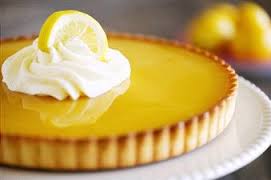
French lemon tart

Versailles Palace


The Palace of Versailles, or simply Versailles (English /vɛərˈs/ vair-sy or/vərˈs/ vər-syFrench: [vɛʁsaj]), is a royal château in Versailles in the Île-de-France region of France. It is also known as the Château de Versailles.
When the château was built, Versailles was a country village; today, however, it is a wealthy suburb of Paris, some 20 kilometres (12 miles) southwest of the French capital. The court of Versailles was the centre of political power in France from 1682, when Louis XIV moved from Paris, until the royal family was forced to return to the capital in October 1789 after the beginning of the French Revolution. Versailles is therefore famous not only as a building, but as a symbol of the system of absolute monarchy of the Ancien Régime.
Bricks=Briques
Glass=verre
clear=effacer
Bronze =bronze
statues=statues

Piperade

Musee d’Orsay

The Musée d'Orsay (French pronunciation: ​[myze dɔʁsɛ]) is a museum in Paris, France, on the left bank of the Seine. It is housed in the former Gare d'Orsay, aBeaux-Arts railway station built between 1898 and 1900. The museum holds mainly French art dating from 1848 to 1914, including paintings, sculptures, furniture, and photography. It houses the largest collection of impressionist andpost-Impressionist masterpieces in the world, by painters including Monet,ManetDegasRenoirCézanneSeuratSisleyGauguin and Van Gogh. Many of these works were held at the Galerie nationale du Jeu de Paume prior to the museum's opening in 1986. It is one of the largest art museums in Europe.

art=art
paintings=peintures
photographs=photographies
furniture=meubles
water=eau

Magret de Canard

Canelés